Untitled design (64)

3 minute reads – Overcoming Fear

1. The High Dive

Maya stood at the bottom of the tall ladder, looking up at the high diving board. To her, it looked like it was a mile high in the sky. The community swimming pool was noisy with children shouting and splashing, but Maya could only hear the loud thumping of her own heart. She had promised her brother, Jason, that today would be the day. For three summers, she had watched the other kids jump off the high board, screaming with joy. Maya had always stayed in the shallow end, afraid of the height and the drop. Jason was already in the water, waving at her. “Come on, Maya! You can do it!” he yelled.

Her hands were sweating as she grabbed the cold metal rails of the ladder. She took the first step. Her legs felt heavy, like they were made of stone. She climbed slowly, one step at a time, refusing to look down. When she finally reached the top, the air felt different. It was windier up there. She walked to the edge of the rough board and looked down. The water seemed very far away, and the people looked like tiny dolls. A wave of dizziness hit her, and she stepped back. Her instinct was to turn around and climb back down the ladder of shame.

But then she looked at the line of kids waiting behind her on the ladder. They were waiting for their turn. She took a deep breath, filling her lungs completely. She remembered what her father had told her: “Fear is just a feeling, it cannot hurt you.” She closed her eyes for a second, counted to three, and stepped forward. She didn’t let herself think anymore. She jumped. The fall lasted only a second, a rush of wind and adrenaline, followed by a loud splash. The cool water surrounded her. She swam to the surface, gasping for air. When she wiped the water from her eyes, she was smiling. The fear was gone, replaced by a rush of pride. She immediately swam to the ladder to do it again.

2. The Microphone on the Stage

Arthur was a quiet boy who loved to write stories, but he hated speaking. He was terrified of people looking at him. When the teacher announced that every student had to read their short story in front of the whole school assembly, Arthur felt sick. He wanted to hide under his desk. For weeks, he could not sleep. He imagined himself tripping on the stairs, forgetting his words, or everyone laughing at him. He tried to convince his teacher to let him skip it, but she smiled and said, “Your story is wonderful, Arthur. The world needs to hear it.”

On the day of the assembly, the auditorium was packed. Hundreds of students sat in rows, whispering and shifting in their seats. Arthur sat backstage, his hands shaking so hard he could barely hold his paper. He felt like running out the back door. When the principal called his name, his legs felt weak. He walked to the center of the stage. The spotlight was bright and hot, blinding him so he couldn’t see the audience clearly. This actually helped. He approached the microphone, and it made a loud screeching noise. The crowd laughed nervously. Arthur froze.

He took a deep breath and looked at his paper. He read the first sentence. His voice was quiet and shaky. “Speak up!” someone shouted from the back. Arthur paused. He thought about his main character, a brave knight who fought dragons. If my character can fight a dragon, I can read a piece of paper, he thought. He started again, louder this time. As he read, he forgot about the audience. He got lost in his own story. He used different voices for the characters and made gestures with his hands. When he finished the last sentence, there was silence for a moment. Then, the whole room erupted in applause. Arthur looked up, blinking in the light. He wasn’t just the quiet boy anymore; he was a storyteller.

3. The Monster in the Basement

For ten-year-old Ben, the basement was the scariest place on Earth. It was a dark, unfinished room with concrete walls, spiderwebs, and a noisy old furnace that looked like a metal beast. Ben avoided the basement at all costs. However, one rainy Tuesday, the power went out in the whole neighborhood. Ben’s mother was cooking dinner on the gas stove. “Ben,” she said, “I need you to go down to the basement and get the flashlights from the shelf. It’s getting too dark in here.” Ben’s eyes went wide. He tried to argue, but his mother was busy and insisted.

Ben opened the basement door. It was pitch black down there. The air smelled of damp earth and old cardboard. He took a small candle and began to descend the wooden stairs. Creak. Creak. Every step groaned under his weight. He imagined that monsters were hiding in the shadows, waiting to grab his ankles. His heart beat fast, like a drum in his chest. Halfway down, he heard a strange scratching noise. Scritch, scratch. Ben froze. He wanted to scream and run back up to the safety of the kitchen.

But then he remembered he was the big brother. His little sister was upstairs, and she was afraid of the dark too. She needed the flashlights. Ben clenched his fists. “I am not afraid,” he whispered to himself, although he didn’t believe it. He forced his feet to move. He reached the bottom of the stairs and held the candle high. The scratching noise came again. Ben looked toward the corner. It wasn’t a monster. It was just a dry leaf blowing against the small window pane from the outside wind. He almost laughed out loud. He walked to the shelf, grabbed the heavy flashlights, and ran back up the stairs two at a time. When he handed the light to his mother, he felt taller. The basement was just a room, and he was the master of it.

4. The Bicycle in the Garage

Mrs. Higgins was sixty years old, and she had a secret. She did not know how to ride a bicycle. When she was a child, she had fallen badly and never tried again. Now, her grandchildren wanted to go on bike rides in the park, and she always had to stay behind on the bench. She felt left out and sad. For her birthday, her husband bought her a beautiful, bright red bicycle with a basket on the front. It sat in the garage for three months, gathering dust. Every time she looked at it, she remembered the pain of scraping her knees fifty years ago.

One sunny morning, Mrs. Higgins decided enough was enough. She put on her comfortable sneakers and a helmet. She wheeled the red bike out into the driveway. Her hands were trembling on the handlebars. She tried to get on, but the bike wobbled, and she quickly put her foot down. “I can’t do this,” she muttered. Her neighbor, a young teenager named Sam, was washing his car nearby. He saw her struggling and walked over. “Don’t look at your feet, Mrs. Higgins,” Sam suggested kindly. “Look straight ahead, where you want to go. Momentum will keep you up.”

Mrs. Higgins nodded. She took a deep breath and pushed off with her left foot. She pedaled once, then twice. The bike wobbled dangerously, but she kept her eyes on the big oak tree at the end of the street. She pedaled faster. Suddenly, the wobbling stopped. She was moving smoothly. The wind brushed past her cheeks, and she felt a sensation of freedom she hadn’t felt in years. She was doing it! She rode all the way to the end of the street and managed a clumsy turn. She was laughing like a little girl. She rode back to her driveway where Sam was clapping. It was never too late to learn, and it was never too late to leave a fear behind.

5. The Dog Across the Street

Elara had been terrified of dogs since she was a toddler. To her, all dogs were wolves. If she saw a dog walking down the sidewalk, she would cross the street to avoid it. If a dog barked, she would jump and cover her ears. This fear made her life difficult because her new boyfriend, Mark, had a Golden Retriever named Buster. Elara refused to go to Mark’s house. She told him to lock the dog in another room, but she knew this wasn’t fair. She knew that if she wanted to be part of Mark’s life, she had to accept his dog.

One afternoon, Mark brought Buster to a neutral place—a quiet corner of the park. Buster was on a short leash. Elara stood ten feet away, her body tense and rigid. The dog looked at her with soft, brown eyes and wagged his tail slowly. “He won’t hurt you,” Mark promised softly. “He just wants to say hello.” Elara took a small step forward. Her instinct screamed at her to run away. She looked at the dog’s mouth, expecting to see sharp teeth, but the dog just panted happily, his tongue hanging out in a goofy smile.

“Hold out your hand,” Mark suggested. “Let him smell you.” Elara extended her trembling hand. Buster stretched his neck forward and gently sniffed her fingers. His nose was wet and cold. He didn’t bite; he didn’t bark. He simply licked her hand once and then sat down, waiting for a pet. The fear in Elara’s chest began to melt. She realized this creature wasn’t a monster; he was just an animal who wanted love. Slowly, she reached out and touched the soft fur on Buster’s head. The dog leaned into her touch. Elara smiled, feeling a huge weight lift off her shoulders. She wasn’t afraid anymore.


Untitled design (65)

3 minute reads – Moral Stories

1. The Baker and the Smell of Bread

There was once a very greedy baker who lived in a small, busy town. He baked the most delicious bread in the whole city. His shop always smelled of warm cinnamon, sweet sugar, and fresh dough. However, the baker was a very unhappy and selfish man. He did not like to share anything, not even a crumb. He counted every coin he earned and frowned at everyone who walked by his window without buying anything.

Every morning, a poor student lived in a small room directly above the bakery. The student had no money to buy the expensive bread. Instead, he would open his window, take a piece of plain, stale bread, and eat it while smelling the delicious aromas rising from the bakery below. The smell of the fresh cakes made his plain food taste better. One day, the baker looked up and saw the student enjoying the smell. The baker became furious. He felt that the student was stealing the smell of his bread. He ran out into the street and shouted, “You must pay me! You are using my smell to enjoy your food!”

The student was confused. “I cannot pay you for a smell,” he said gently. “Smells are free.” The greedy baker did not listen. He dragged the poor student to the town judge. The judge was a wise man who listened to the baker’s complaint. The baker demanded ten gold coins for the years of “stolen” smells. The court was silent. Everyone waited to see what the judge would do.

The judge turned to the student. “Do you have any money?” he asked. The student checked his pockets and found only a few small copper coins. “Give them to me,” the judge said. The student handed over the coins. The baker smiled, thinking he had won. The judge took the coins, cupped them in his hands, and shook them loudly. Clink, clink, clink. He did this for a full minute near the baker’s ears. Then, the judge gave the coins back to the student. “You may go,” the judge said. The baker was angry. “Where is my payment?” he yelled. The judge replied calmly, “You have been paid. The sound of money is the fair payment for the smell of bread.” The baker walked away in shame, learning that greed makes a person foolish.

2. The Two Seeds in the Soil

Two small seeds lay next to each other in the dark, fertile soil during the early spring. They were waiting for the warm rain to wake them up. They began to talk about their future. The first seed was very excited and brave. It said, “I want to grow! I want to send my roots deep into the dirt below me, and I want to push my sprout up through the crust of earth above me. I want to unfurl my tender buds like flags to announce the arrival of spring. I want to feel the warmth of the sun on my face and the blessing of the morning dew on my petals!” The first seed was full of ambition and hope.

The second seed was not excited. It was very afraid. It said, “I am scared. If I send my roots down below, I don’t know what I will find in the dark. If I push my way up through the hard soil, I might damage my delicate sprout. What if I let my buds open and a snail comes to eat them? And if I were to open my blossoms, a small child might pull me from the ground. No, it is much better for me to wait until it is safe.”

So, the second seed waited. It stayed curled up tightly in the dark, refusing to grow. Meanwhile, the first seed began its journey. It pushed hard against the soil. It struggled, but it kept moving. Soon, it broke through the surface. It grew into a beautiful green plant. It enjoyed the rain and the sunshine. It grew tall and strong, and eventually, it bloomed into a magnificent flower that brought joy to everyone who saw it.

A few weeks later, a farm hen was scratching around in the dirt looking for food. The hen saw the first plant, which was now too big and strong to be eaten. However, while scratching the dirt, the hen found the second seed. The seed was still waiting, curled up and small. The hen swallowed the seed in one bite. The seed that was afraid to take the risk of growing lost its chance at life entirely. The moral of the story is that those who refuse to risk and grow get swallowed by life.

3. The Lion and the Clever Rabbit

In a deep, green forest, there lived a cruel lion who was very strong. He was always hungry and killed many animals every day just for fun. The animals of the forest were terrified. They held a meeting to solve this problem. They went to the lion and made a deal. “King Lion,” they said, “please stop hunting us all day. If you stay in your cave, we will send one animal to you every day for your meal. This way, you do not have to hunt, and we can live without fear.” The lion agreed, thinking this was an easy life.

Every day, the animals drew lots to decide who would go to the lion. One day, it was the rabbit’s turn. The rabbit was small, but he was very smart. He did not want to be eaten. He started walking toward the lion’s cave, but he walked very slowly. He stopped to sleep and took his time. He arrived at the lion’s cave just as the sun was setting. The lion was furious. He was pacing back and forth, roaring with hunger. “Why are you late?” the lion shouted. “And why are you so small? You are not even a snack!”

The rabbit bowed his head and spoke with a trembling voice. “I am sorry, my King. I was coming with three other rabbits to make a big meal for you. But on the way, another lion stopped us. He was very big and said he is the new king of this forest. He ate the other three rabbits, but I escaped to tell you.” The lion became very angry. “Another lion? In my forest? Take me to him! I will destroy him!”

The rabbit led the lion to a deep well filled with clear water. “He lives in there,” the rabbit whispered. The lion looked into the well. He saw his own reflection in the water, but he thought it was the enemy lion. He roared at the reflection, and the reflection roared back. Furious, the lion jumped into the well to fight his enemy. He splashed and struggled, but the walls were too high, and the water was too deep. The cruel lion drowned. The clever rabbit went back to the other animals and told them the good news. The forest was finally safe because intelligence is often more powerful than physical strength.

4. The King and the Golden Touch

Many years ago, there lived a King named Midas. He was very rich and had a huge palace filled with valuable items. However, King Midas was not satisfied. He had a great obsession with gold. He loved gold more than anything else in the world. He counted his gold coins every morning and every night. One day, a magical spirit appeared to him because he had done a good deed. The spirit said, “King Midas, I will grant you one wish. Ask for anything you desire.”

Without thinking, Midas replied, “I wish that everything I touch turns to gold.” The spirit warned him, “Are you sure? This wish might not make you happy.” Midas laughed. “Of course! Gold is the best thing in the world.” The spirit granted the wish and disappeared. Midas was thrilled. He touched a table, and it turned to solid gold. He touched a chair, and it became gold. He ran through his garden touching roses, turning them into cold, golden statues. He felt like the most powerful man alive.

Later that afternoon, Midas became hungry. He sat down for a feast. He picked up a slice of fresh bread, but as soon as his fingers touched it, the bread turned into hard gold. He could not bite it. He tried to drink a glass of wine, but the liquid turned to liquid gold in his mouth and choked him. He began to feel fear. He was the richest man in the world, but he was starving.

Just then, his beloved little daughter ran into the room. She saw her father looked sad and ran to hug him. “Father, what is wrong?” she cried. Midas tried to stop her, but it was too late. As soon as he hugged her, she turned into a golden statue. The smile on her face was frozen in metal. Midas fell to his knees and wept. He realized his greed had cost him everything that truly mattered. He cried out to the spirit, “Please, take this gift back! I don’t want gold! I want my daughter!” The spirit felt pity and reversed the spell. Midas learned that food, love, and life are far more valuable than all the gold in the world.

5. The Boy and the Echo

Once there was a young boy who lived with his mother in a house near a large mountain range. The boy was generally good, but he had a bad temper. One day, he got very angry with his mother because she wouldn’t buy him a new toy. He shouted at her and ran out of the house. He ran up the hillside, feeling furious. When he reached a valley, he stopped and screamed at the mountains, “I hate you!”

To his surprise, a voice called back to him from the mountains, shouting, “I hate you!” The boy was startled. He did not know what an echo was. He thought there was a bad boy hiding in the rocks. He shouted back, “You are a coward!” The voice immediately replied, “You are a coward!” The boy became even angrier. He yelled, “Stop it!” and the voice yelled, “Stop it!”

Confused and a little scared, the boy ran back home to his mother. He hugged her and said, “Mom, there is a bad boy in the valley who yells mean things at me.” His mother understood what was happening. She smiled and took his hand. “Come with me,” she said. “I will show you how to change that boy.” They walked back to the valley together.

The mother said, “Now, shout something nice to him.” The boy hesitated, but then he shouted, “I like you!” The voice from the mountain shouted back, “I like you!” The boy was amazed. His mother said, “Try another one.” The boy shouted, “You are great!” and the voice replied, “You are great!” The boy looked at his mother for an explanation. She explained, “My son, this is called an echo, but it is really just like life. Whatever you send out, comes back to you. If you give anger to the world, you will receive anger. But if you give kindness and love, life will give kindness and love back to you.” The boy never forgot this lesson.

Untitled design (66)

3 minute reads – Best Friend

1. The Letter in the Mailbox

Lucas and Sam had lived next door to each other since they were babies. They did everything together. They learned to ride bikes on the same sidewalk, they went to the same school, and they even broke their arms in the same summer. But when they turned fifteen, Sam’s father got a new job in a different country. It was a very sad day when the moving truck arrived. Lucas stood in his driveway and waved goodbye as Sam’s car drove away. He felt like he had lost a part of himself. For the first few weeks, the silence in the neighborhood was terrible. Lucas didn’t want to play video games or ride his bike because doing it alone felt wrong.

They tried to talk online, but the time difference was difficult. When Lucas was awake, Sam was asleep. They started to drift apart. Then, one day, Lucas opened his mailbox and found a physical letter. It had a strange stamp and messy handwriting. It was from Sam. Inside, there was a funny drawing of a teacher they used to dislike and a long story about Sam’s new school. Lucas sat on his front steps and read it three times. He immediately went inside, found a piece of paper, and wrote back. This started a new tradition. Every month, they sent packages to each other. Sam sent strange candy from his new country, and Lucas sent local sports magazines. Writing letters allowed them to share their deep feelings in a way that text messages never did. They told each other about their fears, their new friends, and their hopes for the future.

Three years passed. Lucas was now eighteen and graduating from high school. He was standing in his cap and gown, looking at the crowd of parents. Suddenly, he saw a familiar face. Sam was standing there, holding a sign that said, “Best Friend.” Sam had flown thousands of miles just to be there for this important moment. They ran to each other and hugged. Even though they had lived apart for years, the bond was still there. The letters had kept their friendship strong. They realized that distance does not matter when you have a true best friend. They spent the whole summer catching up, knowing that no matter where they lived, they would always be brothers at heart.


2. The Stray Dog named Barnaby

Elara was a quiet woman who lived alone in a small cottage near the woods. She didn’t have many visitors and often felt quite lonely. She spent her days gardening and drinking tea by the window. One rainy afternoon, she heard a scratching sound at her back door. When she opened it, she saw a wet, shivering dog with muddy fur. He looked hungry and scared. Elara felt pity for the animal. She brought out a bowl of warm milk and some leftover chicken. The dog ate quickly and then looked at her with big, brown eyes. He didn’t leave after eating. He sat on the porch and waited. Elara decided to let him inside to dry off, thinking he would leave in the morning. She named him Barnaby.

Barnaby did not leave the next morning, or the morning after that. He decided that Elara was his family. Slowly, Elara’s life began to change. She was no longer just a lonely woman in a cottage; she was Barnaby’s owner. They developed a routine. In the morning, Barnaby would nudge her hand to wake her up. They went on long walks through the forest. Elara started talking to Barnaby. She told him about her day, her worries, and her childhood memories. Barnaby couldn’t speak, but he was a great listener. He would tilt his head and wag his tail, making Elara feel heard and understood. When she was sad, he would rest his heavy head on her lap. When she was happy, he would jump around and bark.

One winter, Elara got very sick with the flu. She couldn’t get out of bed to feed herself or light the fire. Barnaby seemed to understand that something was wrong. He stayed by her bedside day and night. He barked loudly at the window until the postman noticed and came to check on Elara. The postman called a doctor, and Elara eventually recovered. As she sat up in bed, drinking soup, she looked at the sleeping dog at her feet. She realized she didn’t need a human best friend to be happy. Barnaby was loyal, loving, and always there for her. He was the best friend she had ever had. They sat together in the warm house, enjoying the silence of true companionship.


3. The Science Fair Disaster

Kevin and Mike were known as the dynamic duo at their high school. Kevin was the smart, organized one who loved science. Mike was the athletic, messy one who loved sports. Despite their differences, they supported each other in everything. This month, it was the regional science fair. Kevin had been working on a complex robot for six months. It was his dream to win the first prize. Mike didn’t understand how the robot worked, but he would bring Kevin snacks and keep him company in the garage while he worked late into the night. The day before the fair, disaster struck. While trying to make a final adjustment, Kevin accidentally knocked a cup of water onto the robot’s circuit board. Sparks flew, and the machine went dead.

Kevin stared at the broken robot in horror. He put his head in his hands and started to cry. “It’s over,” he said. “I can’t fix it in time. I quit.” Mike looked at his defeated friend. He knew how much this meant to Kevin. “No, you don’t quit,” Mike said firmly. “We are going to fix this.” Kevin argued that it was impossible, but Mike grabbed the tool belt. “Tell me what to do,” Mike said. “I can’t do the math, but I can use a screwdriver.” For the next twelve hours, they worked without stopping. Kevin gave instructions, and Mike’s steady hands replaced the wires. They were tired, hungry, and frustrated. At 3:00 AM, they were ready to give up, but Mike cracked a joke that made Kevin laugh, breaking the tension. They drank energy drinks and kept going.

The sun came up, and the robot finally beeped to life. It wasn’t perfect, but it moved. They rushed to the school gym just in time for the judges to arrive. Kevin stood proudly by his invention, with dark circles under his eyes. When the judges asked how he built it, Kevin looked over at Mike, who was sleeping on a chair in the corner. “I had a great partner,” Kevin said. Kevin ended up winning second place, not first, but he didn’t care. The trophy wasn’t the important part. He walked over to Mike and woke him up. “We did it,” Kevin said. Mike smiled sleepily. They realized that their friendship was strong enough to fix any disaster. They walked home together, tired but happy, knowing they could count on each other for anything.


4. The Forgiveness Pact

Jessica and Sarah had been best friends since kindergarten, but they had a massive argument last week. It was a silly fight about a borrowed dress that got stained, but it turned into shouting about other things. They said hurtful words to each other. For seven days, they ignored each other at school. They sat at different lunch tables and looked away when they passed in the hallway. Jessica felt a heavy knot in her stomach every day. She missed Sarah’s laugh. She missed sending funny text messages to her. However, Jessica was stubborn. She felt she was right and Sarah should apologize first. Sarah felt the exact same way. The silence between them was growing bigger and colder every day.

On Friday afternoon, the school announced a surprise fire drill. All the students had to go out to the football field and stand in lines. It was freezing cold outside, and Jessica had forgotten her jacket. She stood there shivering, hugging her arms to keep warm. She looked miserable. Sarah was standing a few feet away. Sarah was wearing a warm coat. She looked at Jessica shaking in the cold wind. Sarah fought with her pride for a moment. She was still angry about the dress, but she hated seeing her best friend suffer. Sarah quietly took off her coat and walked over. Without saying a word, she draped the coat over Jessica’s shoulders. Jessica looked up, surprised to see Sarah standing there.

Jessica pulled the coat tight around herself. “Thank you,” she whispered. Sarah shrugged, looking at her shoes. “You looked cold,” Sarah said. The anger suddenly melted away. Jessica started to cry. “I’m sorry about the dress,” she said. “I’m sorry I yelled,” Sarah replied instantly. They both started laughing through their tears. The fight seemed so stupid now. They stood together under the one coat, sharing the warmth until the drill was over. They promised that in the future, they would never let pride go on for longer than a day. As they walked back into the school, they held hands. The argument had tested their friendship, but forgiveness had made it stronger than it was before.


5. The Mountain Adventure

Tom and David shared a love for the outdoors. Every summer, they planned a big hiking trip. This year, they decided to climb Mount Raine, a tall peak that took two days to conquer. They packed their backpacks with tents, food, and maps. They were excited to escape the noise of the city and enjoy nature. They started the hike on a Saturday morning. The sun was shining, and the birds were singing. “This is going to be easy!” Tom shouted, marching ahead. They walked for hours, talking about their jobs and families. They felt free and happy. However, mountains can be unpredictable. By the late afternoon, the blue sky turned dark gray. Thick clouds rolled in, covering the path ahead.

A heavy storm began. Rain poured down, and the temperature dropped rapidly. The path became slippery with mud. “We need to find shelter!” David yelled over the sound of the wind. They couldn’t see the trail markers anymore. They were lost. Panic started to set in. Tom slipped and twisted his ankle. He groaned in pain. “I can’t walk, Dave. You go on,” Tom said. David shook his head. “I am not leaving you.” David supported Tom’s weight, and they moved slowly. They found a small cave under a rock ledge. It was tight and damp, but it was dry. They crawled inside and huddled together. They shared their last energy bar and drank water sparingly.

They spent the night in the cave, listening to the thunder. To keep their spirits up, they told stories about their funniest memories. They laughed about the time they tried to cook a turkey and burned it, and the time they got lost in a shopping mall. The laughter kept them warm. By morning, the storm had passed. The sun came out, revealing the path just a few meters away. David helped Tom limp down the mountain. It took them all day, but they finally reached their car. They were dirty, exhausted, and hungry, but they were safe. As they drove home, eating burgers from a drive-thru, they knew this was an adventure they would talk about for the rest of their lives. Surviving the storm together proved that they were not just friends; they were a team.

Untitled design (67)

3 minute reads – Daily Morning Routines

1. The Runner’s Quiet Sunrise

The digital alarm clock on Sarah’s bedside table blinked 4:45 AM. Outside, the world was completely dark and silent. Sarah did not hit the snooze button. She sat up immediately, stretched her arms over her head, and took a deep breath. This was her favorite time of the day because the city belonged only to her. She drank a large glass of water that she kept by her bed. Then, she moved quietly to the closet to put on her running gear. She tied her shoelaces tight, double-checking them to make sure they wouldn’t come undone.

Sarah stepped out the front door and felt the cool morning air on her face. It was chilly, but she knew she would warm up soon. She started with a slow jog to wake up her muscles. As she ran down the empty streets, she listened to the rhythmic sound of her sneakers hitting the pavement. After ten minutes, she reached the park. By now, the sky was beginning to change. Deep blue turned into purple, and then a soft pink appeared on the horizon. Sarah increased her speed. She felt strong and focused. She watched the birds waking up in the trees and saw a few other early runners waving at her. This connection with nature, before the noise of traffic and work began, gave her a sense of peace. She pushed herself for the last mile, sprinting until she reached the old oak tree at the end of the park path.

Breathing heavily but feeling accomplished, Sarah walked the rest of the way home to cool down. The sun was now fully up, casting a golden light over the neighborhood. Back inside her apartment, she took a refreshing shower and put on her work clothes. She went to the kitchen and made a bowl of oatmeal with fresh berries and honey. As she ate her healthy breakfast, she looked at her phone to check her schedule for the day. She felt energized and mentally prepared for any challenge. The morning run had cleared her mind, and she was ready to start her job with a positive attitude.


2. The Chaos of the Johnson House

Sunlight streamed through the curtains, hitting Mark’s face. He groaned and looked at the clock. It was 7:15 AM. The alarm had not gone off, or maybe he had slept through it. Panic set in immediately. “Wake up!” he shouted, jumping out of bed. He ran to the room down the hall where his two children, Leo and sleepy little Sophie, were still dreaming. Mark turned on the lights and clapped his hands. “School bus leaves in forty minutes! Go, go, go!” The peaceful house suddenly turned into a zone of pure chaos. The dog started barking at the excitement, adding to the noise.

While the children brushed their teeth—arguing over who got to use the blue stool—Mark ran to the kitchen. He grabbed bread, cheese, and apples to make lunchboxes. He moved with lightning speed, tossing items into bags. “Dad, I can’t find my left shoe!” Leo yelled from the living room. Mark sighed, abandoning the sandwiches for a moment. He searched under the sofa and found the missing sneaker behind a pile of toys. After getting Leo’s shoes on, he went back to the kitchen. He quickly toasted some bagels for breakfast. “Eat fast,” he commanded gently as he poured orange juice. The kids ate with messy faces while Mark tried to comb Sophie’s hair. It was a race against time. He checked his watch every thirty seconds, feeling his heart rate rising.

At 7:50 AM, Mark ushered the kids out the door. They ran down the driveway just as the large yellow school bus pulled up to the corner. The children climbed on and waved goodbye through the window. Mark waved back, catching his breath. He walked back into the house, which was now incredibly silent. Toys were on the floor, and crumbs were on the table, but the mission was successful. He smiled, walked to the coffee machine, and finally pressed the button to brew a fresh cup. He sat down at the messy kitchen table, took a sip of the hot coffee, and enjoyed the first moment of stillness he had felt all morning.


3. The Farmer’s Early Start

Long before the sun even thought about rising, old Mr. Harrison was awake. At 4:00 AM, the rooster crowed, but Mr. Harrison was already pulling on his heavy work boots. He lived on a farm that had been in his family for three generations. His morning routine was not about alarms or rushing; it was about duty. He put on his thick flannel shirt and his worn-out hat. The house was cold, so he quickly lit the wood stove in the kitchen to warm it up for his wife when she woke up later. He grabbed a metal pail and stepped out onto the porch. The air smelled of wet dirt and grass.

He walked slowly to the barn, his boots crunching on the gravel. The animals knew he was coming. The cows began to low softly, waiting to be milked. Mr. Harrison greeted them by name. “Good morning, Bessie. Good morning, Daisy,” he said in a calm, deep voice. He spent the next hour milking the cows and feeding the chickens. The physical work was hard for an older man, but it kept him strong. He checked the fences to make sure no foxes had tried to get in during the night. As he worked, the sun began to peek over the hills, painting the fields in bright green and gold. He paused for a moment, leaning on a fence post, to watch the fog lift off the pond. It was a beautiful sight that he never got tired of seeing.

By 6:30 AM, the heavy chores were done. Mr. Harrison carried the fresh milk back to the farmhouse. Inside, the kitchen was now warm and smelled of frying bacon. His wife, Martha, was at the stove. “Coffee is ready,” she said with a smile. Mr. Harrison washed his hands at the sink, scrubbing away the dirt. He sat down at the sturdy wooden table. He drank his black coffee and ate a large plate of eggs and toast. He and Martha didn’t talk much; they enjoyed the comfortable silence of a long marriage. With his stomach full and the morning work finished, Mr. Harrison felt satisfied. The day had barely begun for others, but he had already accomplished the most important tasks.


4. The City Commuter’s Journey

Inside a high-rise apartment in the center of the city, James woke up to the sound of jazz music playing softly from his smart speaker. It was 6:30 AM. He enjoyed a precise, organized morning. He made his bed perfectly, smoothing out every wrinkle in the sheets. James walked to his closet and selected a crisp white shirt and a navy blue suit. He dressed carefully, checking his reflection in the mirror to ensure his tie was straight. Appearance was very important in his job at the bank. He went to his espresso machine, pressed a button, and waited for the dark, rich coffee to fill his cup. He drank it while standing by the window, looking down at the busy cars seventeen floors below.

James left his apartment at exactly 7:15 AM. He took the elevator down and stepped out into the noisy city streets. The city was already awake. Cars honked, sirens wailed, and people rushed everywhere. James put on his noise-canceling headphones to block out the sounds. He played an audiobook about economics as he walked to the subway station. The station was crowded and hot. He swiped his card and squeezed onto a train packed with other workers. There was no room to sit, so he held onto the metal pole, swaying as the train sped through the dark tunnels. Despite the crowd, James stayed in his own world, listening to his book and planning his meetings for the day.

The train arrived at his stop, and the doors hissed open. James joined the flow of people walking up the stairs to the street level. He stopped at his favorite bagel cart on the corner. The vendor knew him well. “The usual, James?” the man asked. James nodded and paid for an everything bagel with cream cheese. He walked the final block to his office building, a giant tower of glass and steel. He spun through the revolving doors and nodded at the security guard. As he swiped his badge to enter the elevators, he checked his watch. 7:55 AM. He was five minutes early. He took a bite of his bagel, feeling ready to handle the high-pressure day ahead.


5. The Writer’s Creative Ritual

Elena woke up slowly. She did not use an alarm clock because she believed waking up naturally was better for her creativity. It was around 8:00 AM when she finally opened her eyes. Her bedroom was filled with books stacked on the floor and on the shelves. She stayed in bed for twenty minutes, just thinking. She let her mind wander, trying to remember her dreams, hoping to find an idea for her next story. Finally, she got up and put on a comfortable, oversized sweater and soft socks. She did not check her phone or look at social media. She wanted to keep her mind clear of other people’s voices.

She walked into her small kitchen and filled a kettle with water. While the water boiled, she opened the window to let in some fresh air and listen to the birds in the garden. She made a pot of herbal tea, smelling the peppermint and lemon. With her hot mug in hand, she moved to her writing desk in the corner of the living room. It was a messy desk, covered in notebooks, colorful pens, and sticky notes. She sat down and opened her journal. For the next hour, she did “free writing.” She wrote down whatever came into her head without worrying about grammar or spelling. She wrote about the weather, her feelings, and strange characters she imagined. This was her warm-up, like an athlete stretching before a game.

After writing three pages by hand, Elena felt her brain fully wake up. She stretched her neck and took a long sip of her tea, which was now warm instead of hot. She felt light and inspired. She finally turned on her laptop. The screen glowed, waiting for her words. She opened the file for the novel she was working on. She read the last paragraph she had written the day before and smiled. She knew exactly what needed to happen next in the story. She began to type, her fingers moving quickly across the keys. Her morning routine had done its job; the real work could now begin.

Untitled design (62)

5 stories on discoveries – 3 minute reads

1. The Screen Queen’s Secret Signal

Based on Hedy Lamarr

In 1942, Hedy Lamarr was the most famous woman in Hollywood. People paid just to see her walk across a room. But at night, when the cameras stopped rolling, Hedy didn’t go to parties. She went to her workshop. She sat under a bright lamp with wires and gears scattered across her desk. While the world saw a beautiful actress, Hedy saw herself as an inventor. She wanted to help win World War II.

She knew the Allies had a big problem. Their radio-controlled torpedoes were being jammed by the enemy. If the enemy found the right radio frequency, they could stop the torpedo from hitting its target. Hedy had a brilliant idea: what if the frequency kept changing? If the signal “hopped” from one frequency to another very quickly, the enemy wouldn’t know where to look.

She teamed up with a composer named George Antheil. Together, they looked at how player pianos worked. A player piano uses a roll of paper with holes in it to play music automatically. Hedy realized they could use a similar system to synchronize the radio signals between a ship and a torpedo. They created a device that used 88 different frequencies—the same number of keys on a piano.

Hedy presented her “Frequency Hopping” invention to the U.S. Navy. The officers looked at her and laughed. They told her she should go out and sell war bonds instead of trying to be an engineer. They didn’t take her seriously because she was a woman and a movie star. They locked her patent in a drawer for decades.

It wasn’t until much later that the world realized Hedy was right. Her idea eventually became the foundation for Wi-Fi, Bluetooth, and GPS. Hedy died before she saw how much she changed the world, but today, every time we use a smartphone, we are using a piece of her mind. She proved that you can be the most beautiful woman in the room and the smartest person in the room at the same time.


2. The Man Who Built the Iron Monster

Based on Isambard Kingdom Brunel

Isambard Kingdom Brunel was a small man with a very tall hat and even bigger dreams. He lived in Victorian England, a time when everything was changing. While others were happy with wooden ships and horses, Brunel wanted to build things out of iron and steam. He wanted to connect the entire world.

His greatest challenge was a ship called the SS Great Eastern. It was five times larger than any ship ever built. People called it the “Leviathan.” It was so big that it didn’t use just one engine; it had giant paddle wheels on the sides and a massive propeller at the back. Brunel wanted this ship to carry enough coal to sail from England to Australia without stopping.

The construction was a nightmare. The ship was so heavy it got stuck during the launch. Brunel spent all his money and his health on the project. He walked the ship’s iron decks every day, smoking cigars and shouting orders. He didn’t care about the mud or the rain. He only cared about the math and the iron. He believed that if you did the calculations correctly, nature had to obey you.

One day, while testing the ship, a giant explosion rocked the deck. A pipe had burst. Brunel was already sick from stress, and the news broke his heart. He died just days after the ship finally set sail. People thought the Great Eastern was a failure because it was too expensive to run as a passenger ship.

However, the “Iron Monster” ended up doing something no other ship could do. Because it was so large, it was the only vessel capable of carrying the thousands of miles of heavy cable needed to cross the Atlantic Ocean. Brunel’s “failure” was the ship that finally laid the Transatlantic Telegraph Cable, allowing Europe and America to talk to each other instantly for the first time. Brunel didn’t just build a ship; he built the first bridge for the modern world.


3. The Enchantress of Numbers

Based on Ada Lovelace

Ada Lovelace lived in a world of silk dresses and ballroom dances, but her mind lived in a world of pure logic. She was the daughter of the famous poet Lord Byron, but her mother didn’t want her to be a poet. Her mother forced her to study mathematics, hoping it would keep her from becoming “wild” like her father. It didn’t work. Ada became wild about numbers.

She met an engineer named Charles Babbage, who was designing a massive machine called the Analytical Engine. It was a giant “calculator” made of brass gears and powered by steam. Most people thought it was just a tool for doing hard math problems quickly. Ada saw something much deeper.

She realized that if the machine could manipulate numbers, it could also manipulate anything that could be represented by numbers—like music, pictures, or words. She wrote a set of instructions for the machine. These instructions showed how the engine could calculate a complex series of numbers called Bernoulli numbers. This was the world’s first computer program.

Ada wrote that the machine “weaves algebraic patterns just as the Jacquard loom weaves flowers and leaves.” She understood that computers weren’t just for math; they were for creating. She called her work “Poetical Science.” She imagined a future where machines could think and help humans solve the mysteries of the universe.

The Analytical Engine was never actually finished during her lifetime because it was too expensive and too advanced for the technology of the 1800s. Ada died young, and her notes were forgotten for a hundred years. When modern computers were finally built in the 1940s, scientists found her writings and were shocked. A woman in a Victorian dress had already figured out the soul of the computer a century before it even existed.


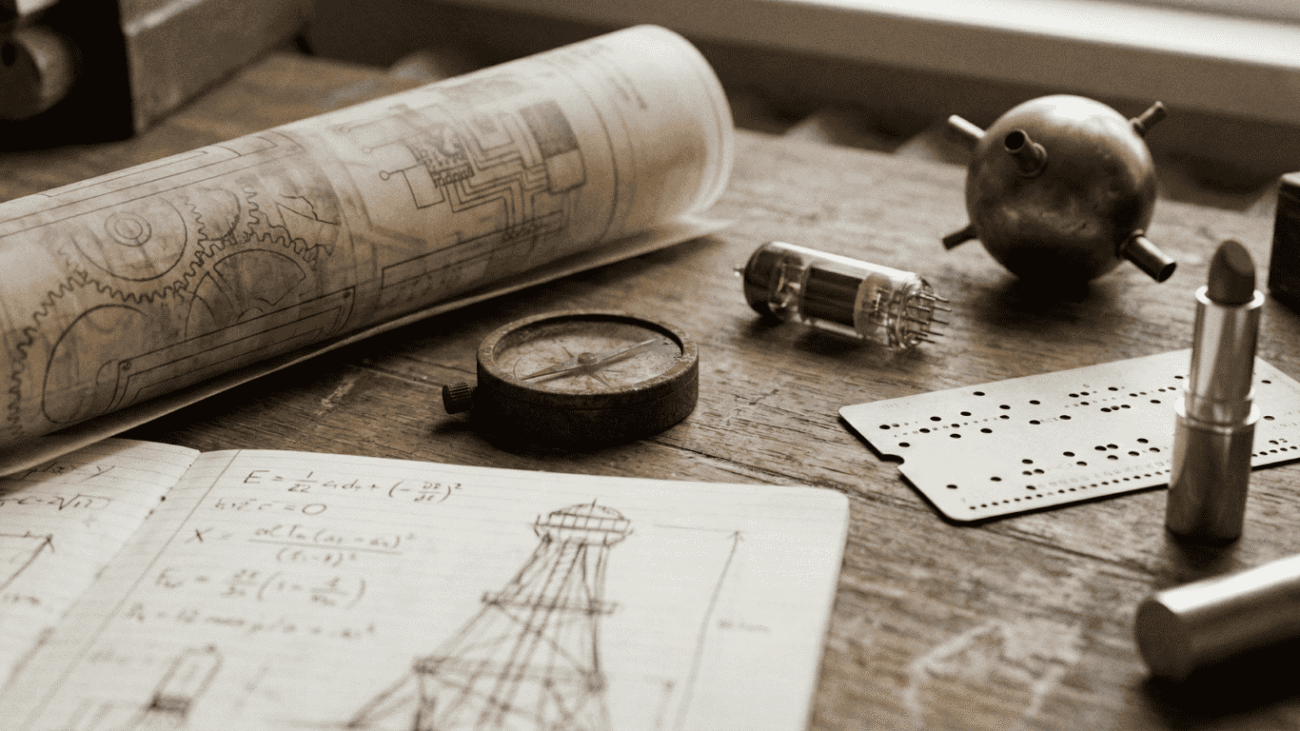
4. The Lightning in the Tower

Based on Nikola Tesla

Nikola Tesla was a man who talked to pigeons and dreamed of lightning. He moved to New York with nothing but four cents in his pocket and a head full of ideas. He eventually gave the world Alternating Current (AC), the system that powers our lights and homes today. But Tesla didn’t want to stop at wires. He wanted the whole world to have free, wireless energy.

In 1901, he began building a giant wooden structure on Long Island called Wardenclyffe Tower. It looked like a mushroom made of beams, standing 187 feet tall. Tesla believed he could use the Earth itself to transmit electricity. He thought people could just stick a rod in the ground anywhere in the world and pull power out of the air.

He worked late into the night. Witnesses said they saw blue lightning bolts shooting from the top of the tower, lighting up the sky so brightly that people miles away could read the newspaper at midnight. Tesla was obsessed. He barely slept, and he spoke about his inventions as if they were his children. He wanted to give his “children” to the world for free.

But the world wasn’t ready for free things. His investor, the wealthy J.P. Morgan, realized that if the energy was wireless and free, he couldn’t put a meter on it to charge people money. Morgan stopped giving Tesla funds. The tower began to rot. Tesla fell into debt, and the government eventually tore the tower down for scrap metal during the war.

Tesla spent his final years living in a hotel, lonely and forgotten by many. He spoke to the birds in the park and claimed he had invented a “Death Ray” to end all wars. While many thought he was crazy, his work with radio waves and wireless signals became the blueprint for the modern world. Tesla was an engineer who tried to build the future too early, and he paid the price in silence.


5. The Fire of Alexandria

Based on Heron of Alexandria

Nearly 2,000 years ago, in the great city of Alexandria, a man named Heron sat in a workshop filled with scrolls and bronze tools. Alexandria was the center of the world’s knowledge, and Heron was its greatest tinkerer. He loved to make things move using water, air pressure, and steam.

One day, Heron created something simple but magical. He took a hollow metal ball and attached two curved pipes to it. He filled the ball with water and placed it over a fire. As the water boiled, steam shot out of the pipes, and the ball began to spin faster and faster. He called it the Aeolipile. It was the world’s first steam engine.

In the temples of Alexandria, Heron used his engineering skills to create “miracles.” He built doors that opened automatically when a priest lit a fire on the altar. He created mechanical birds that sang and statues that poured wine by themselves. To the people of Rome and Egypt, it looked like magic. To Heron, it was just pneumatics and levers.

However, Heron lived in a world that didn’t need engines. The Roman Empire had millions of slaves to do the hard work. They didn’t need a machine to pump water or pull a cart when they could just force a person to do it. The Aeolipile remained a toy—a clever curiosity for dinner parties and temple tricks.

Imagine if Heron had been taken seriously. If the Romans had used his steam engine to power grain mills or ships, the Industrial Revolution might have happened 1,700 years earlier. We might have had trains in the year 200 and spaceships by the year 1000. Instead, Heron’s designs were buried when the Great Library of Alexandria burned. His work sat in dusty scrolls until the 1700s, when engineers finally rediscovered the power of steam and changed the world exactly the way Heron knew they could.


Reflecting on the Blueprint: Each of these engineers saw a version of the future that their peers could not. Whether it was Hedy’s hopping signals or Heron’s spinning ball of steam, the world eventually caught up to them.

Untitled design (61)

3 minute reads – Exploring Space

1. The Garden on Mars

Commander Elena stood inside the pressurized dome of Ares Base One. Outside, the Martian landscape was a sea of frozen red dust and jagged rocks. For six months, she had lived in a world of metal and recycled air. But today was different.

In the center of the lab sat a small ceramic pot filled with treated Martian soil. After weeks of careful monitoring, a tiny green sprout had finally pushed through the surface. It was a simple kale plant, but to the crew, it was a miracle.

“Life on Mars,” Elena whispered. She remembered her childhood in a small village on Earth, where green was everywhere. Here, green was a symbol of hope. It meant that humans could do more than just survive on the Red Planet; they could grow.

The plant represented a future where children might play under glass domes, surrounded by forests that breathed out oxygen for a new civilization. As the sun set, turning the Martian sky a dusty blue, Elena recorded her log. The mission was no longer just about rocks and radiation. It was about becoming a multi-planetary species. One leaf at a time, they were turning the red world green.


2. The Silent Voyager

Deep in the cold, dark void beyond the edge of our solar system, a small craft drifted silently. This was Voyager 3, a probe launched decades ago to find the limit of the sun’s reach. It was billions of miles away from the pale blue dot it once called home.

Its cameras had long since been turned off to save power, but its sensors were still humming. Suddenly, the probe’s computer detected something unusual. It wasn’t a planet or a star. It was a ripple in the fabric of space—a gravitational wave from a distant black hole collision.

The probe dutifully recorded the data. It used its tiny thrusters to point its high-gain antenna back toward Earth. The signal would take nearly a day to travel across the emptiness at the speed of light.

On Earth, a young scientist in a quiet laboratory saw a notification flash on her screen. “We have contact,” she gasped. The data from the silent voyager told a story of a violent event that happened millions of years ago in a galaxy far away. Even though the probe was lonely and far from home, it was still our eyes and ears in the great unknown, proving that humanity’s reach is limited only by our imagination.


3. First Light on Europa

The submarine Abyss sank slowly through the twenty-mile-thick ice shell of Europa, a moon of Jupiter. Above them was a ceiling of frozen water; below them was a dark, hidden ocean that had never seen the sun.

“Activating external lights,” Pilot Sam announced.

As the powerful beams cut through the black water, the crew gasped. They weren’t looking at a desert of sand. They were looking at a forest of giant, glowing chimneys rising from the seafloor. These were hydrothermal vents, spewing heat and minerals from the moon’s core.

Suddenly, something moved in the light. It was translucent, like a jellyfish, but it moved with purpose. It pulsed with a soft violet light, drifting past the submarine’s window.

“We aren’t alone,” Sam said, his voice trembling with excitement.

For centuries, humans had looked at the stars for neighbors. It turned out they were hiding right under the ice of a moon in our own backyard. The discovery changed everything. It meant that life didn’t need a bright sun or a blue sky to exist. It only needed water, heat, and the will to survive in the dark.


4. The Last Moon Miner

Arthur had spent thirty years mining Helium-3 on the Moon. From his outpost at the Shackleton Crater, he watched the Earth rise every day—a beautiful, swirling marble of white and blue.

His job was to operate the giant rovers that sifted through the lunar dust. This fuel was sent back to Earth to power the fusion reactors that provided clean energy for billions of people. Without the Moon miners, Earth would be dark.

It was a lonely life, but Arthur loved the silence. He loved the way he could jump twenty feet in the air because of the low gravity. He loved the patterns his boots left in the dust—prints that would stay there for millions of years because there was no wind to blow them away.

On his final day before retirement, Arthur took a long walk to the edge of the crater. He looked at the vast, gray plains and the black sky. He realized he was a part of history. He wasn’t just a miner; he was a pioneer who helped save his home planet by working on another one. He left his favorite shovel behind in the dust, a small monument to a life spent among the craters.


5. The Starship Orphan

Leo was the first human born on a starship. He had never felt the wind on his face or smelled rain on hot pavement. To him, “nature” was the hydroponic garden on Deck 4, and “the sky” was the digital ceiling of his bedroom that simulated a sunny day.

The ship, The Odyssey, was on a hundred-year journey to Proxima Centauri. Leo was part of the “middle generation”—the people who would live and die on the ship so that their grandchildren could walk on a new world.

Sometimes, Leo felt sad that he would never see Earth. But then his grandfather would take him to the observation deck. They would look at the stars, which weren’t twinkling like they do through an atmosphere, but were steady, piercing points of light.

“We are the bridge, Leo,” his grandfather would say. “Earth is our past, and that star ahead is our future. We are the ones who carry the flame across the dark.”

Leo realized that his life had a grand purpose. He wasn’t trapped in a ship; he was sailing across the greatest ocean in existence. He began to study the ship’s engines, determined to keep the flame burning bright until they finally reached their new home.

Untitled design (60)

3 minute reads – Business and Money

1. The Fisherman and the Businessman

A rich businessman went on a vacation to a small village by the sea. He wore a fine suit and checked his phone constantly. Walking by the beach, he saw a fisherman sitting in a boat. The fisherman had a few large fish. He looked calm and happy.

“You caught good fish!” the businessman said. “Why don’t you stay out longer and catch more?”

The fisherman smiled. “This is enough for my family. We have food for today.”

“But what do you do with the rest of your time?” asked the businessman.

“I sleep late,” said the fisherman. “I play with my children. I take a nap with my wife. In the evening, I play music with my friends.”

The businessman laughed. “I can help you. You should catch more fish. Then you can buy a bigger boat. With a bigger boat, you catch more fish. Soon, you can buy a fleet of boats. You can open a factory. You can move to the big city and be very rich like me.”

“And then what?” asked the fisherman.

“Then?” said the businessman. “Then you can retire! You can move to a small village by the sea. You can sleep late, play with your grandkids, and enjoy your life.”

The fisherman looked at the ocean. “But sir,” he said softly. “I am doing that right now.”

The businessman stopped. He looked at his expensive watch. He looked at the happy fisherman. He realized that he was working hard to get a life that the fisherman already had. He learned that money is a tool to buy freedom, but sometimes, we are already free.


2. The Cost of “Cheap”

Mr. Baker needed a new pair of boots for work. He went to a fancy shoe store. He found a pair of strong leather boots. They were very comfortable, but the price tag said $200.

“That is too expensive!” Mr. Baker thought. “I will not pay that much for shoes.”

He went to a discount store across the street. He found a pair of boots that looked almost the same. They were shiny and black. The price was only $50. Mr. Baker was happy. He bought the cheap boots and felt very smart. “I saved $150,” he told his wife.

However, the boots were not made of real leather. They were made of plastic. After two months, the winter rain came. The cheap boots leaked. Mr. Baker’s feet got wet and cold. The plastic cracked. The soles fell off. Mr. Baker had to throw them away.

He went back to the discount store and bought another pair for $50. Two months later, the same thing happened. Over the next year, Mr. Baker bought four pairs of cheap boots. He spent $200 in total. But he still had wet feet, and now he had no boots left.

If he had bought the expensive boots first, he would still have dry feet today. Mr. Baker learned a hard lesson about business. Sometimes, a low price costs you more money in the end. He learned that quality is an investment, not just an expense.


3. The Diamond and the Water

A wealthy merchant was traveling across a great desert. He carried a heavy bag. Inside the bag was a large diamond. It was the size of an egg. It was worth millions of dollars. In the city, this diamond could buy a palace, a hundred horses, and fine food for a lifetime. The merchant checked the bag every hour to make sure the diamond was safe.

Halfway across the desert, the merchant ran out of water. The sun was hot and cruel. The sand burned his feet. His throat was dry like dust. He walked for two days without a drink. He felt weak. He fell to his knees in the sand.

Suddenly, he saw another traveler. The traveler was poor. He had no gold and no fine clothes. But, he had a large leather bottle full of cool, fresh water.

The merchant gasped. “Please,” he said. “Give me a drink. I am dying.”

The traveler looked at him. “I have very little water,” the traveler said. “I need it to survive.”

The merchant opened his bag. He took out the giant diamond. It sparkled in the sun. “I will give you this diamond,” the merchant cried. “It is worth a kingdom! Just give me one cup of water.”

The traveler shook his head. “I cannot eat a diamond. I cannot drink a diamond. Out here, this stone is just a rock. My water is life.”

The merchant looked at the shiny stone. In the city, it was everything. In the desert, it was nothing. He realized that value is not real. It changes depending on where you are and what you need.


4. The Silent Partner

In a small town in the mountains, there was a vegetable shop. It sold the best carrots, potatoes, and sweet apples. But this shop was special. It had no shopkeeper. There was no one to watch the customers.

There was only a wooden box on the table. A sign above the box read: Take what you need. Pay what is fair.

A visitor from the city came to the town. He was a business expert. He watched the shop with surprise. He saw people walk in, take a bag of apples, and put money in the box. Nobody stole the food. Nobody took money from the box.

The visitor asked a local man, “Are you not afraid? People will steal from you. You will lose all your profit. You need cameras and guards.”

The local man smiled. “We do not use guards,” he said. “We use trust.”

The visitor did not understand. “Trust does not make money,” he said.

“Actually,” the local man replied. “It makes more money. We do not pay for a shopkeeper. We do not pay for cameras. We do not pay for guards. Our costs are low. Also, the customers feel respected. Because we trust them, they want to be honest. They often pay a little extra because they love this shop.”

The business expert looked at the full money box. He realized he was wrong. In the city, businesses spent millions to stop thieves. Here, they spent nothing and made a profit. He learned that trust is a form of currency. It is invisible, but it has a very high value.


5. The Golden Cage

Mr. Sterling was the CEO of a massive company. He was the “King of Money.” He had a driver to take him to work. He had a chef to cook his lunch. He had assistants to answer his phone. He had everything.

However, Mr. Sterling was never alone. His phone rang at dinner. His phone rang on the weekend. He had meetings at 6:00 AM and emails at midnight. He could not go for a walk because he had a schedule. He could not visit his friends because he had a board meeting.

One afternoon, he looked out the window of his office. He was on the 50th floor. Down on the street, he saw a young artist painting on a canvas. The artist wore messy clothes. He was eating a simple sandwich. But the artist looked free. He stopped painting to watch a bird. He laughed at a funny dog walking by. He lay on the grass to look at the clouds.

Mr. Sterling looked at his own reflection in the glass window. He saw his expensive suit and his tired eyes. He realized he was inside a cage. The bars of the cage were made of gold, but it was still a cage.

He worked for money to be free, but the money had trapped him. The artist down on the street had very little coin, but he owned his own time. Mr. Sterling went back to his desk and looked at his calendar. He learned that true wealth is not just the number in the bank, but the ability to say “I am finished for today.”

Untitled design (59)

5 stories for Beginners in English

The Lost Book

Sam loved the school library. It was a quiet place with many tall shelves. Every Friday, Sam picked a new book. Last week, he picked a book about blue whales. The cover was shiny and blue. He loved the pictures of the big ocean animals.

He took the book home to read. He read it in his bed. He read it at the kitchen table. He read it on the bus. But on Thursday night, Sam had a big problem. He could not find the book.

He looked under his bed. There were only old shoes and a sock. He looked in the living room. He looked under the sofa. He looked behind the TV. The book was not there. Sam felt his stomach turn. He felt hot and worried. “What will the teacher say?” he thought. “She will be mad.”

Sam asked his mother for help. “Mom, I can’t find my library book,” he said. His mom smiled kindly. “Let’s look in the car,” she said. They walked outside to the car. It was dark. His mom turned on the light. There, on the back seat, was the shiny blue book.

Sam felt very happy. He took a deep breath. The next day, he walked to the library with a smile. He gave the book to the librarian, Mrs. Hill. “Did you like the book?” she asked. “Yes,” Sam said. “But I am happy to give it back!” Sam learned that taking care of things is a big job. He decided to keep his books in his bag from now on.


2. The Long Walk Home

One day, James finished his work late. It was six o’clock in the evening. He walked to the bus stop, but he saw the back of the bus driving away. He missed it. The next bus was in one hour.

“I will walk home,” James said. The walk was long, but the weather was nice. The air was cool and fresh.

Usually, James takes the bus. On the bus, he looks at his phone. He does not look at the world. Today was different. As he walked, he saw things he usually missed. He saw a small bakery with fresh bread in the window. The smell was sweet and warm. He saw a park where children played with a red ball. They laughed and ran on the green grass.

James walked past a flower shop. There were yellow, pink, and white flowers. He stopped to smell a red rose. It smelled lovely. He decided to buy one for his wife.

He walked for forty minutes. His legs were a little tired, but his mind was clear. When he got home, he gave the rose to his wife. She was very surprised. “Why did you buy this?” she asked. “I missed the bus,” James said with a smile. “It was the best mistake of my day.” James learned that sometimes, slowing down helps you see the beautiful things in life.


3. The Hard Test

Emma was very nervous. Tomorrow was the big history test. History was hard for Emma. She could not remember all the names and dates. The years mixed together in her head.

She sat at her desk in her bedroom. Her room was quiet. Her phone was off. She had her textbook, her notes, and a blue pen. She looked at the page. “I can do this,” she whispered.

She read the first chapter again. She wrote the important dates on a piece of paper. 1945 – The war ended. 1969 – Man walked on the moon. Writing the words helped her remember. She studied for two hours. Her eyes were tired. She wanted to sleep. She wanted to watch TV. But she did not stop. She drank a glass of cold water and kept reading.

The next morning, Emma walked into the classroom. The teacher gave everyone the paper. The room was silent. All she could hear was the clock on the wall. Tick, tock, tick, tock.

Emma looked at the first question. She knew the answer! She smiled. She looked at the second question. She knew that one too. Her hand moved fast across the paper.

Two days later, the teacher gave the tests back. Emma got a shiny gold star on her paper. She got an ‘A’. Emma felt proud. The test was hard, but hard work made it easy.


4. The First Day of Work

Ben put on his best shirt. It was white and clean. He put on his black shoes. Today was his first day at a new job. He was going to work at a coffee shop in the city.

Ben was scared. He did not know how to make fancy coffee. He only knew how to make instant coffee at home. “What if I make a mistake?” he thought. “What if I drop a cup?”

He walked into the shop. It smelled like roasted beans and milk. The manager, Alice, met him at the door. “Welcome, Ben!” she said. She had a big, warm smile. “Are you ready to learn?” “Yes, but I am nervous,” Ben said honestly. “That is okay,” Alice said. “Everyone is nervous on day one.”

Alice showed Ben the coffee machine. It was big and shiny. It had many buttons. “Press this button for water,” Alice said. “Press this one for steam.” Ben watched her carefully. Then, it was his turn. A customer came in. “Can I have a latte, please?” the man asked.

Ben’s hands shook a little. He pressed the buttons. He poured the milk. He gave the cup to the man. The man took a sip. “This is great. Thank you!” he said. Ben let out a long breath. He smiled at Alice. He made his first coffee. It was not perfect, but it was good. Ben learned that starting something new is scary, but doing it is the only way to learn.


5. The Rainy Afternoon

It was a rainy Sunday. The rain hit the window hard. Tap, tap, tap. The sky was grey and dark. Little Tommy was bored. He could not go outside to play soccer. He sat on the floor with a sad face.

His grandfather, Mr. Lee, sat in a big chair reading a paper. He looked at Tommy. “Why are you sad, Tommy?” he asked. “I hate the rain,” Tommy said. “I have nothing to do.”

Mr. Lee put down his paper. “Rainy days are good for stories,” he said. “Come here.” Tommy sat by his grandfather’s feet. “Tell me a story about when you were a boy,” Tommy said.

Mr. Lee told Tommy about his old school. He told him about his first dog, a brown dog named Buster. He told him about how he met Tommy’s grandmother at a dance. Tommy listened with wide eyes. It was better than TV. It was better than a video game.

Then, Mr. Lee said, “Let’s make cookies.” They went to the kitchen. They mixed sugar and flour. They made a mess, but it was fun. The kitchen smelled sweet and warm.

When the cookies were ready, they ate them with warm milk. Tommy looked at the window. It was still raining, but he was not sad anymore. “I like rainy days now,” Tommy said. “Why?” asked Mr. Lee. “Because I get to hear stories and eat cookies with you.”

Untitled design (58)

5 Stories Found in History – 3 minute reads

The Land That Became the Sea

Ten thousand years ago, the coastline of Australia looked very different. In the place we now call the Great Barrier Reef, there was no coral and no deep water. Instead, there was a wide, green plain stretched out under the sun. It was covered in eucalyptus forests and grassy fields. This was the home of the Gungganyji people.

A young boy named Birra lived there with his family. For them, the ocean was far away—a long journey to the east. They hunted kangaroo on the dry plains and camped near fresh rivers.

But slowly, something began to change.

It did not happen in a single day. The ocean did not crash down like a wall; it crept forward like a slow, hungry animal. Season after season, the high-tide mark moved closer to the camp. The river water, once sweet and fresh, turned salty. The trees at the edge of the forest turned brown and died as their roots drowned in the saltwater.

The elders of the tribe watched the horizon with worry. “The Great Water is rising,” Birra’s grandfather told him. “It wants the land back.”

Soon, the water swallowed their favorite hunting grounds. The valleys filled up to become bays. The tops of the hills were cut off from the mainland, turning into islands. The people had no choice but to pack up their camps and move inland, retreating to higher ground.

“We must remember this,” the grandfather said to Birra as they looked back at their sunken home. “You must tell your children that we once walked where the sharks now swim.”

Eventually, the water stopped rising. The drowned forest became the seabed, and the coral grew over the old land. But the Gungganyji people never forgot. They kept the story alive, passing it down from father to son for three hundred generations, remembering the time when the reef was a forest.

The Lost Sister of the Sky

A very long time ago, in the deepest past, the night sky looked different than it does today. In those nights, seven bright sisters danced together in the heavens. They were stars, glowing and beautiful, known as the Seven Sisters.

On earth, the people looked up and counted them: “One, two, three, four, five, six, seven.” Everyone could see all seven clearly. They were inseparable, twinkling close together in a small group.

But the sisters were not alone in the sky. Not far away stood a great hunter named Orion. He was powerful and bright, with a belt of three stars. Orion loved the seven sisters, but he was too aggressive. He chased them across the night sky, trying to catch them. Night after night, the chase continued—the sisters fleeing, and Orion following close behind.

One of the sisters, the youngest and shyest, grew tired of the chase. She was afraid of the hunter. She did not want to be seen.

Slowly, she moved closer to her older sister for protection. She stepped behind her sister’s bright light to hide. Over thousands of years, she moved so close that her light merged with her sister’s light. To the people watching from earth, it looked like she had disappeared.

The people looked up and counted again. “One, two, three, four, five, six…” They paused. “Where is the seventh sister?”

The elders told the children, “She is hiding. She is shy because the hunter is watching. Only those with the sharpest eyes can see her peeking out.”

Even though she was hidden, the people never changed the name. They still called them the Seven Sisters, honoring the memory of the lost star who hid herself away in the deep past, long before history began.

The Stone That Remembered the Fire

Long before cities were built or books were written, the world was a warm and green place. The people lived in the valleys of what is now Turkey. They hunted gazelles and gathered wild wheat, and life was good. They watched the stars every night, for the stars were their calendar and their gods.

But one year, a new light appeared in the sky.

At first, it was just a small, bright speck, like a guest who arrived uninvited. But night after night, it grew larger. It became a trail of fire that hissed across the heavens. Then, the terrible day arrived. The sky tore open with a roar that shook the mountains. The fire did not stay in the sky; it fell to the earth.

The ground rolled like ocean waves. Great clouds of dust and smoke rose up, blotting out the sun. For many weeks, the sun did not return. The air grew bitter cold. The animals fled or died, and the green valleys turned gray and frozen. The people huddled in caves, terrified that the world was ending. They called this the time of the Great Cold.

When the dust finally settled and the survivors could walk outside again, the elders made a decision. “We must not forget this,” they said. “We must tell the people of the future when the sky fell.”

They climbed to the top of a high hill—a sacred meeting place we now call Göbekli Tepe. There, they cut huge blocks of limestone from the earth. They dragged these massive pillars into a circle, standing them upright like sentinels guarding a secret.

The master carver chose the most important stone, which we know today as Pillar 43. He did not have an alphabet, so he used the language of the sky. He looked up at the constellations that were visible during the disaster.

He carved a scorpion, sharp and dangerous. He carved a great vulture, the bird of death, spreading its wings over the stone. Beside the vulture, he carved a headless man, a symbol of the terrible loss of life they had suffered. These were not just animals; they were a map of the stars. The carver was freezing the sky in stone, marking the exact date of the catastrophe.

“This is our message,” the carver thought as his stone chisel chipped away at the limestone. “When the stars look like this again, remember the fire.”

When the temple was finished, the people did something strange. They did not live in it. Instead, they carefully buried the entire site with dirt and rubble. They hid their story beneath the earth to protect it from the wind and rain.

For twelve thousand years, the Vulture Stone slept in the dark. Civilizations rose and fell. Empires crumbled. Finally, in our modern time, we dug up the hill and found the pillar standing exactly where the carver left it. We looked at the animals and the headless man, and we understood. The people of the past were reaching out across time, warning us that the sky can change in an instant.

The Great Bear Hunt

In the oldest times, when the ice covered the northern lands and winter was long, there was a great bear. This was no ordinary bear; he was massive and magical, wandering through the forests of the night.

Three brothers, who were the best hunters in their tribe, spotted the bear’s tracks. “We must catch him,” the eldest brother said. “He will feed our village for the whole winter.”

They grabbed their spears and began the chase. The bear was fast, crashing through the trees and bounding over frozen rivers. But the brothers were determined. They ran for days, never stopping to rest, their eyes fixed on the great beast.

The bear realized he could not outrun them on the earth. He was tired, and the hunters were getting closer. He reached the edge of the world where the mountains touched the sky. With a mighty roar, the bear leaped up from the peak of the mountain and jumped straight into the heavens.

The hunters did not hesitate. They were so focused on the hunt that they leaped into the sky right after him. They did not fall back down. Instead, they turned into stars.

To this day, you can see them. The four stars of the bowl form the great bear. The three stars of the handle are the three hunters, chasing him forever across the night.

But the story does not end there. Every autumn, as the sun begins to fade, the hunters get close enough to wound the bear. Their arrow strikes him, and a drop of his blood falls from the sky down to the earth.

This magical blood lands on the leaves of the trees below. It turns the maple and the oak leaves red and brown. This is why the forest changes color every fall.

But the bear does not die. As winter comes, he heals and moves low in the sky to hibernate. When spring returns, the bear wakes up, and the eternal chase begins all over again.

The Giant Who Spat Fire

A very, very long time ago—long before the pyramids were built, and even before the last Ice Age covered the world in cold—the land of southeastern Australia was different. It was the home of the Gunditjmara people. They lived on the earth, hunting and gathering, watching the sun rise and set over a peaceful land.

But the earth was waiting for something to happen.

One day, four great beings appeared on the horizon. These were not men; they were giants, powerful creators who walked across the country with heavy steps. They wandered the land, looking for a place to rest. Three of the giants moved on, walking to other parts of the country, but the fourth giant stopped. His name was Budj Bim.

He looked at the flat earth and decided he would stay there. He crouched down low, his massive body becoming the shape of a mountain. But something inside him was burning. He was not made of cool stone; he was made of fire.

Suddenly, Budj Bim opened his mouth. The storytellers say that his teeth were not white like ours. They were glowing, red and orange, hotter than any campfire. As he opened his jaws, his burning teeth spilled out of his mouth.

This was not just a story; it was a volcano erupting.

The “teeth” were molten lava. The liquid rock poured over the giant’s lips and flowed down his sides. It hissed and roared, moving like a river of fire across the green grass. The Gunditjmara people saw the smoke rising and felt the ground shaking beneath their feet. They saw the glowing river coming toward them and knew they had to run.

They fled to safety, watching from a distance as the fire covered their hunting grounds. The lava flowed far and wide, changing everything it touched. It filled the valleys and blocked the rivers.

When the fire finally cooled down, the land was changed forever. The hot “teeth” turned into hard, black rocks. These rocks created a complex system of channels, wetlands, and ponds.

The people returned to this new landscape. They did not forget the giant. They learned to build fish traps in the hard black rocks that Budj Bim had spat out. And for thirty-seven thousand years, grandfathers told their grandsons: “Walk carefully here. This is the place where the Giant crouched down and spat his fiery teeth onto the ground.”

Gemini_Generated_Image_3jf69e3jf69e3jf6

3 Minute Reads – Conversational Passages

#1 The Mystery of the Blue Box Reading Time

It was a rainy Tuesday afternoon. The rain hit the window with a hard, steady sound. Inside his warm apartment, Leo was reading a book. He was happy to be inside. He did not like the cold, and he did not like the wet weather.

Suddenly, there was a loud knock on the door.

Leo was surprised. He was not expecting anyone. He put his book down and walked to the door. When he opened it, nobody was there. The hallway was empty. He looked left, and he looked right. It was quiet.

Then, he looked down.

Sitting on his doormat was a small, bright blue box. It was wrapped in paper, but the paper was wet from the rain. There was no stamp on it. There was no address. There was only one word written on the top in black ink: ELENA.

“Who is Elena?” Leo asked himself.

He picked up the box. It was heavy. He shook it gently. Clunk, clunk. Something hard was inside.

Leo knew his neighbors. Mr. Smith lived on the left, and Mrs. Green lived on the right. There was no Elena in his building. He stood in his living room, holding the wet blue box. He knew he should not open it. It was not his. But he was very curious.

“Maybe there is a clue on the box,” he thought.

He turned the box over. On the bottom, there was a small sticker. It was a price tag from a shop called “The City Bakery.” Leo knew that shop. It was famous for its chocolate cake. It was on the other side of town.

Leo looked at the clock. It was 4:00 PM. He had nothing to do. He put on his coat and grabbed his umbrella. “I will solve this mystery,” he decided.

The walk to the bakery took twenty minutes. The rain was stopping, and the sun was trying to come out. When Leo walked into the bakery, it smelled delicious. It smelled like warm bread and sugar.

He walked to the counter. A friendly woman was working there.

“Hello,” Leo said. “I found this box outside my door. It has a sticker from your shop. Do you know who ‘Elena’ is?”

The woman looked at the blue box. Her eyes went wide. “Oh my goodness!” she cried. “That is Elena’s box! She was here this morning. She was crying because she lost it. She left it on the bus, I think. But how did it get to your house?”

“I don’t know,” said Leo. “Someone knocked and left it.”

“Elena works at the library next door,” the woman said. “Go quickly! She will be so happy.”

Leo ran to the library. He saw a woman sitting at the front desk. She looked very sad. She was holding her head in her hands.

“Excuse me?” Leo said softly. “Are you Elena?”

The woman looked up. “Yes, I am.”

Leo held out the blue box. “I think this belongs to you.”

Elena stood up fast. She grabbed the box and held it close to her heart. She looked like she wanted to cry, but this time with happy tears. “My music box,” she whispered. “My grandmother gave this to me before she passed away. I thought I lost it forever. Thank you. Thank you so much.”

“You are welcome,” Leo smiled. “It was an adventure.”

“Please,” Elena said, wiping her eyes. “Let me buy you a coffee. It is the least I can do.”

Leo looked outside. The rain had stopped completely. The sun was shining.

“I would love a coffee,” Leo said.

They walked back to the bakery together. Leo made a new friend that day, all because of a mysterious blue box and a knock on the door.

#2 The Shop That Never Took Money

Ben was a university student, and like many students, he was often broke. It was the week before his final exams, and he had a big problem. He lost his chemistry textbook on the bus. He needed that book to study, but he had zero money in his bank account until next Friday.

Walking down a busy street, feeling very stressed, Ben saw a small shop. He had never noticed it before. The sign above the door just said “The Trust Shop.”

He walked inside. The shop was quiet and smelled like old paper and tea. It was filled with all kinds of things—clocks, lamps, coats, and shelves full of books.

At the back of the shop, an older man with kind eyes was reading a newspaper behind a simple wooden counter. There was no cash register.

“Hello,” the man said softly. “Can I help you find something?”

“I’m just looking,” Ben said. He walked over to the book shelves. To his surprise, he found the exact chemistry textbook he needed. It looked almost new.

He picked it up and walked to the counter. “Excuse me,” Ben said. “How much is this book?”

The old man smiled. “How much do you have?”

Ben felt his face get hot. “Honestly? I have nothing right now. I get paid next week. I can put it back.”

“No need,” the man said. He pushed a small, open notebook toward Ben. It was filled with handwritten names and lists of items. “Write your name here, and write down ‘chemistry book’.”

Ben was confused. “You want me to just… take it? And pay you later?”

“If you want to pay later, yes,” the man said. “Or, if you never have the money, then you never pay. It is your choice. This shop runs on trust.”

Ben could not believe it. Was this a trick? He looked at the man, then at the book. He really needed it to pass his exam.

Slowly, Ben picked up the pen. He wrote his name, Ben Carter, and Chemistry Textbook.

“Thank you,” Ben said, his voice shaking a little. “I will come back. I promise.”

“I know you will,” the man said calmly, going back to his newspaper.

Ben studied hard all week. He passed his exam with a good grade. On Friday, as soon as he got paid, he walked straight back to The Trust Shop. He had fifty dollars in his pocket—the full price of a new book.

The old man was there again. Ben put the money on the counter. “For the book,” Ben said proudly.

The man opened the notebook, found Ben’s name, and drew a neat line through it. He did not count the money. He just smiled.

“Thank you, Ben,” he said.

Ben left the shop feeling lighter than air. He realized the shop did not just give away free things. It gave people a chance to prove who they really were.

#3 The Lift That Stopped Between Floors

It was 5:00 PM on a Friday. People were rushing to leave the tall office building in the city center. Five strangers stepped into the elevator on the 20th floor.

There was James, a businessman in a gray suit who looked very serious. There was Sarah, a university student wearing big headphones. There was an older woman named Mrs. Higgins, holding a heavy bag. There was a young man named Dave, who was holding a large box of donuts. And finally, there was a man in a blue uniform named Ken.

The doors closed. The elevator began to go down. Smoothly, it passed the 19th floor, then the 18th.

Suddenly, there was a loud CLUNK.

The elevator stopped shaking. The lights flickered, went off for a second, and then came back on. They were stuck exactly between the 14th and 13th floors.

“Oh no,” whispered James. He pressed the emergency button. “Hello? Can anyone hear us?”

A voice came through the speaker. “We know you are stuck. Please wait. It will take about ten minutes to fix.”

The elevator was very small and very quiet. Everyone looked at the floor. The air felt heavy.

“I hate small spaces,” Ken in the blue uniform said. He looked nervous. He started to loosen his tie.

“It is okay,” Mrs. Higgins said kindly. “We are safe.”

The silence returned. It was awkward.

Then, Dave’s stomach made a loud growling noise. Everyone looked at him.

Dave’s face turned red. “I am sorry,” he said. “I missed lunch. And I am holding two dozen donuts for a party that I am already late for.”

Sarah took off her headphones. “What kind of donuts?” she asked.

“Chocolate and glazed,” Dave said. He looked at the group. “Does anyone… want one?”

James, the serious businessman, sighed. He checked his watch. “Well, I am going to miss my train anyway. I would love a chocolate one.”

“Me too,” said Ken.

“Why not?” said Mrs. Higgins.

Dave opened the box. For the next few minutes, the five strangers did not look at their phones. They ate donuts. They complained about the rainy weather. They laughed when Mrs. Higgins told a funny story about her cat. Ken stopped feeling nervous. James stopped checking his watch. The small box of an elevator felt like a tiny café.

“This is actually the best part of my day,” Sarah said, wiping sugar off her face. “My classes were terrible today.”

“Mine too,” agreed James. “My boss was shouting all afternoon.”

Suddenly, the elevator jerked. Ding!

The motor started humming again. They moved down smoothly. 12… 11… 10…

Everyone stopped talking. They quickly fixed their clothes and brushed crumbs off their shirts. The elevator reached the ground floor. The doors slid open.

The lobby was full of people running home. The noise of the city rushed in.

Usually, when an elevator opens, people run out instantly. But this time, nobody moved. They all stood there for a moment, looking at each other. They didn’t want to break the connection they had just made.

“Well,” James said finally. “That was… nice.”

“Thanks for the donuts,” said Mrs. Higgins.

“Good luck with your party, Dave,” said Sarah.

One by one, they stepped out into the busy crowd. They were strangers again, but they all walked away with a small smile on their faces.

#4 I Practiced English With a Rickshaw Driver

Rohan was a university student in a busy city. He was studying English literature and was very proud of his language skills. Sometimes, he liked to show off.

One hot afternoon, Rohan waved at a rickshaw to stop. The driver was an old man wearing simple, dusty clothes. He looked very tired.

Rohan climbed into the seat. He decided to play a small joke. He wanted to see if the driver would be confused.

“My good man,” Rohan said in a loud, fancy voice. “I desire to be transported to the Central Library. Please proceed with caution and do not delay, as my time is extremely valuable.”

Rohan waited for the driver to look confused or to just nod his head silently.

Instead, the driver turned around. He looked Rohan directly in the eyes.

“Certainly, sir,” the driver replied in clear, perfect English. ” The traffic on the main road is quite terrible at this hour. If you do not mind, I will take a shortcut through the side streets. It will be much more efficient.”

Rohan’s mouth fell open. He was shocked. “You… you speak English?”

“Yes, I do,” the driver said, starting to pedal the rickshaw. “Is that surprising?”

Rohan felt his face turn red. He felt very ashamed of his joke. “I am sorry,” he stammered. “I just… I did not expect it. Where did you learn to speak so well?”

The driver smiled as he navigated through the crowd. “I love languages,” he explained. “When I was young, I wanted to be a teacher. But my family was poor, so I had to start working. I could not go to university like you.”

“But your grammar is perfect,” Rohan said.

“I learn every day,” the driver said. “I listen to the English news on the radio. When passengers leave newspapers in my rickshaw, I read them. I practice speaking in my head while I drive. Just because I drive a rickshaw does not mean I stopped learning.”

Rohan sat quietly for the rest of the ride. He looked at the driver’s back. Five minutes ago, he saw only a poor man in dusty clothes. Now, he saw a man of intelligence and determination.

When they arrived at the library, Rohan got out. The fare was 50 rupees. Rohan took out a 100-rupee note.

“Keep the change,” Rohan said. “Please.”

The driver shook his head and gave the change back. “The fare is 50. That is the fair price. But thank you for the conversation.”

Rohan watched the rickshaw drive away. He realized he had learned two lessons that day. First, never judge a book by its cover. And second, education does not only happen inside a classroom.

#5 The Voice Inside My Head Spoke English

Maria was walking to the grocery store. It was a normal morning. She needed to buy bread, milk, and apples.

She was thinking about her day. “I need to hurry,” she thought. “The store closes at noon on Sundays.”

She stopped walking. She stood still in the middle of the sidewalk. Her eyes went wide.

She realized something strange. She had just thought that sentence in English.

Maria was from Brazil. Her first language was Portuguese. For three years, she had studied English very hard. She went to classes, she watched movies, and she read books. But inside her head—her private thoughts—had always been in Portuguese.

Until today.

“Did I just think in English?” she whispered to herself.

She tried it again. She looked at a tall tree. That tree is very tall, she thought. She looked at a red car. That car is driving too fast, she thought.

It was happening. The voice inside her head was speaking English.

At first, Maria felt excited. “It is working!” she thought. “My brain is changing!” She felt proud. All those hours of studying were finally paying off. She felt like a superhero who just discovered a new power.

But then, she felt a little scary feeling in her stomach.

“If I think in English,” she wondered, “will I forget Portuguese? Will I lose who I am?”

Her inner voice felt different. It felt sharper and more direct than her Portuguese voice. It felt like a stranger was living in her mind.

She continued walking to the store. She decided to test this new voice. She tried to have a debate with herself.

Should I buy the expensive apples or the cheap apples? she asked herself in English. The expensive ones are sweeter, her English voice answered. But I need to save money, her Portuguese voice suddenly argued back.

Maria laughed out loud on the street. Now she had two voices! They were arguing with each other.

She realized she did not lose anything. She just added something new. Her brain was not a small box that was full. It was a house, and she had just built a new room.

She walked into the store with a smile. She grabbed a basket.

Okay, she thought in English. Let’s go shopping.

Vamos lá, she thought in Portuguese.

It was going to be a very interesting day.